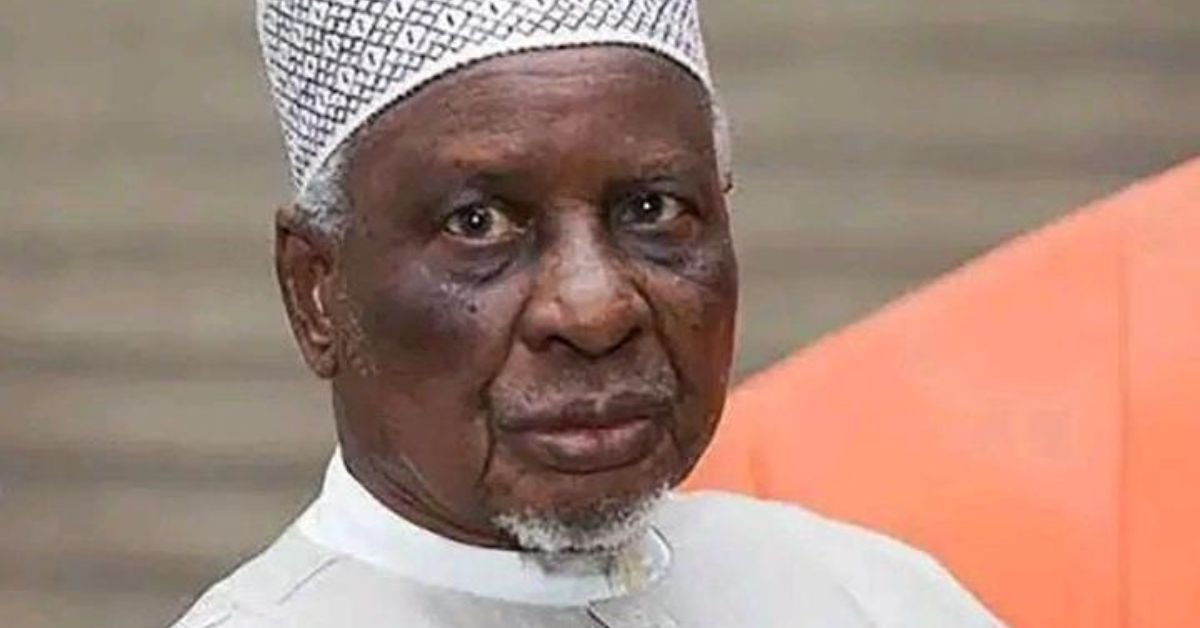
The religious landscape of Northern Nigeria is often perceived as a monolithic entity predominantly defined by Islam However the regions central swathe famously known as the Middle Belt stands as a profound counter-narrative where Christianity has taken deep and resilient roots This socio-religious dynamic was succinctly captured in a widely circulated statement attributed to a prominent public commentator possibly Elder Tanko Yakasai or a figure sharing his perspective Muslims Didnt Convert To Christianity That Is Why Christianity Is Stronger In Middle BeltYakasai .
This statement offers a crucial historically-grounded argument that challenges the simplistic understanding of religious spread and identity in Nigeria It suggests that the strength of Christianity in the Middle Belt is not an outcome of converting entrenched Muslim populations but rather the successful evangelization of the areas diverse non-Muslim traditionalist communities during the colonial and post-colonial eras .
The Historical Context The NoGo Areas for Missions
To understand Yakasais assertion one must examine the colonial religious policy in Northern Nigeria The British colonial administration primarily through the indirect rule system largely respected the authority of the Islamic Emirates which spanned the core Hausa and Fulani territories A key policy principle was the prohibition of Christian proselytization within established Muslim domains Missionaries were often restricted from operating in the core caliphate areas creating a de facto no-go zone for Christian evangelism .
Also Read : Nigerian Air Force Releases List Of Shortlisted Applicants For Basic Military Training Course 2025 Exams
This restriction was primarily aimed at maintaining stability and preventing friction with the powerful Muslim aristocracy Consequently the massive concentrated Muslim populations of the far North were insulated from Christian missionary efforts They had been largely Islamised over centuries and their Islamic identity was deeply interwoven with their political legal and social structures .
The Traditionalist Breakthrough A New Identity
While the doors to the Muslim Emirates were closed the same did not apply to the regions inhabited by the numerous diverse non-Muslim traditionalist ethnic groupsthe very peoples who largely make up the Middle Belt today Groups like the Tiv Idoma Angas Berom Jukun and countless others whose religious practice revolved around indigenous African faiths became the primary focus of Christian missionary work .
The Conversion Phenomenon
The conversion to Christianity in these areas was rapid and profound It wasnt simply a spiritual shift it became a crucial catalyst for sociopolitical transformation and identity formation .
- Social Upliftment Missionaries brought not just the Gospel but also Western education healthcare and skills acquisition For many traditionalist groups Christianity became the pathway to literacy modernity and a voice within the colonial and post-colonial structure .
- A United Front As suggested by historians the embrace of Christianity offered these disparate minority groups a common trans-ethnic identity This shared Christian identity proved instrumental in uniting them for a common political purpose resisting the political and cultural dominance of the far Norths Islamic Emirates This collective consciousness eventually fueled the sociopolitical movements that agitated for the creation of the Middle Belt as a distinct entity .
- Political Bulwark Some analysts argue that the success of Christian missions in the Middle Belt inadvertently fulfilled a historical vision of creating a Christianized traditionalist bulwark against the further expansion of Islam southwards By providing a new formidable cultural and religious identity Christianity created a successful line of resistance to assimilation .
The Implication of Yakasais Stance
Yakasais statement therefore strips away any notion of a direct conversion competition between the two major religions in the Middle Belt It suggests .
1 The Muslim core remained Muslim The original Muslim populace in the North has overwhelmingly retained its faith proving resistant to conversion efforts due to deep historical and political entrenchment 2 Christianity filled a vacuum Christianitys strength in the Middle Belt comes from successfully converting the regions indigenous non-Muslim groups who were previously adherents of African Traditional Religion ATR .
In essence the Middle Belt is Christian-majority today because its indigenous peoples found a new unifying religious identity in Christianity not because Muslims abandoned Islam The resulting religious demarcation has not only shaped the regions demography but has also defined its distinct political trajectory and its perennial tension with the rest of Northern Nigeria This dual religious reality continues to be one of the most defining and complex features of Nigerias political and social geography The strength of Christianity in the Middle Belt is thus a testament to the effectiveness of missionary activity among indigenous groups and the political utility of a shared religious identity in a multi-ethnic state .
Disclaimer
The news information presented here is based on available reports and reliable sources concerning a public figures historical and sociological comments about religion and politics in Nigeria Readers should cross-check updates and verify details from official news outlets and historical records .