Kuwait Residence & Work Visa Renewal 2026
Kuwait Residence & Work Visa Renewal 2026 has been digitized to the latter. Kuwait has radically reformed its immigration system under a new Ministerial Resolution No. 2249/2025, which became effective in the end of December 2025. Those paper stickers and queues are a thing of the past, the 2026 world will be characterized by Sahel App, DHAMAN insurance, and the Debt-First compliance policy.
This guide is a summary of the major steps, new fees, and key legal pitfalls that you should not fall into to remain a legal entity in the State of Kuwait, whether you are an Articile 18 private-sector professional or an Articile 22 sponsoring family.
Digital Platforms & Compliance (Essential 2026)
Your smartphone will be the key tool of residency in 2026. The Ministry of Interior (MOI) has already shifted to the use of a Paperless Iqama system in which all the records are kept electronically.
- Sahel App (Renewal Module): It is the core of the process. It is all now through the Sahel App which enables residents to make renewals, monitor their days in the country as an Overseas Stay, and get real-time notification in case their residency faces threat of cancellation.
- Meta Platform (Biometrics): You can be flagged even to renew basic renewals updating your Biometric Fingerprinting. Unless you have undergone this mandatory enrolment, you will not be able to renew your button in Sahel.
- Kuwait Mobile ID (Digital Iqama): Passport physical residency stickers become phased out in 2026. The Kuwait Mobile ID app reflects your legal status; the most important thing is that the Latin name on the app needs to be identical to the one on the passport; otherwise, the automated system will refuse to renew you.
- PACI Pay the Civil ID Fee: And as soon as you have permission to live in Sahel, you should go to the PACI portal and pay the required 5 KWD card to refresh your digital identity.
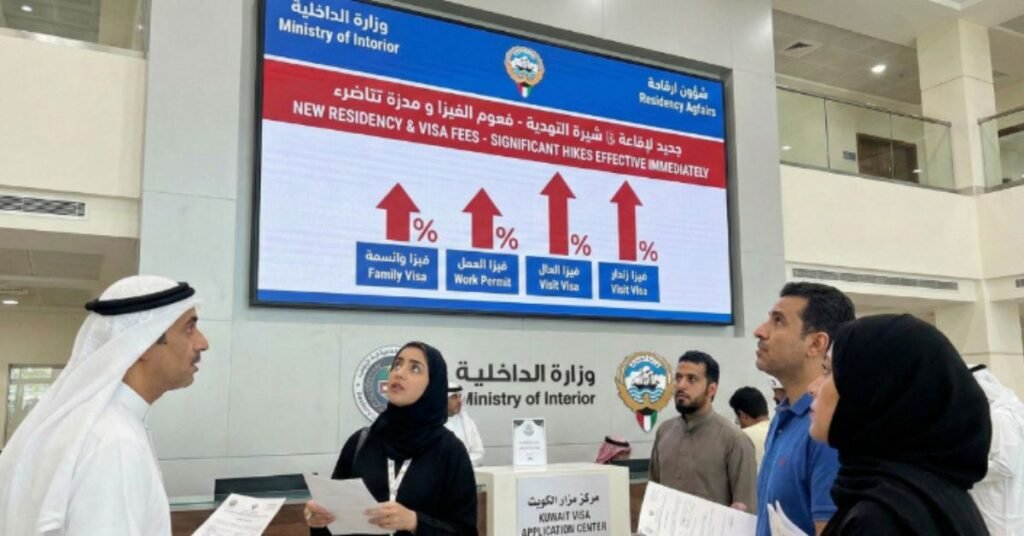
Mandatory Health and Insurance (The 2026 Increase)
The greatest transformation in 2026 will be the separation of insurance with the ancient fixed government rates and a transition to the DHAMAN healthcare system of workers in the private sector.
- KD 100 Mandatory Health Insurance: According to the new regulations of 2026, most expatriates (Article 18 and Article 22 dependents) have been brought to a new annual health insurance rate of 100 KWD.
- DHAMAN Hospitals: To Article 18 employees, your renewal will now be under a strict condition of the DHAMAN health system. You have to pay your insurance via the DHAMAN portal and verify it then the MOI system will allow you to continue with the renewal of your residency.
- Health Assurance Validity: Your insurance validity has now become a firm limit on your residency. A one year duration of payment of insurance can only allow you to renew your residency within one year, irrespective of your length of contract agreement.
Important Regulations: The 6-month and Passport Regulations
The new laws 2026 are more than ever restricting your physical presence in the country.
- Automatic Cancellation (6-Month Rule): Your residency is automatically cancelled after 180 consecutive days staying in Kuwait, and is automatically cancelled on 181 days.
- Passport Validity (6-Month Rule): You are not allowed to renew residency even when your passport has less than 6 months remaining. Nevertheless, the period of residence is no longer necessarily linked to the expiry of the passport, and the employers have become a bit more flexible.
- Outstanding State Debts: At Kuwait, there is a new policy of Debt-First. You have to clear all your Traffic Fines, Electricity/Water Bills, and all arrears at the ministry of Communication through Sahel to renew your iqama.
Checklist of renewal 2026 step-by-step
Purge All Debts: Check the Sahel app about any fine or utility bills that have not been paid and pay them instantly.
- Employer Approval (Ashal): Before your work permit can be renewed, you will be required to use the Ashal Portal (Public Authority for Manpower).
- Pay Health Insurance: Go to the MOH/DHAMAN site and pay the 100 KWD required fee.
- Carry out perform in Sahel: Select to “Services”- Ministry of Interior- Residency Renewal.
- Biometric Check: When questioned, schedule an appointment on the Meta platform to have your fingerprint.
- Complete Civil ID: Once you receive the notification that the residency is issued, visit the PACI web site where you will need to pay 5 KWD to obtain your new Civil ID.
FAQs
When I am out of Kuwait, can I renew my residency?
Indeed, in 2026, you will be able to renew your residency online using Sahel when you are away, as long as you have not surpassed the 6-month (180 days) absence quota.
How much is the fee of my children due for the DHAMAN?
Article 22 (Health insurance fee of the dependents) has been revised to 100 KWD annually, just like those in Article 18 workers.
Is the 800KWD salary requirement mandatory to everyone?
Yes, for new family visas. Nonetheless, some professions such as doctors, engineers and teachers can be exempted or have a different threshold. The current residencies can be renewed as a general rule even in the case of a decrease in salary, as long as the pre-increase visa was granted.
My Civil ID remains as to be processed and my residency is renewed. Can I travel?
Yes. In the future, in 2026, your Kuwait Mobile ID app is your official travel document at the airport on the one hand, together with a passport.
What about in the case of missing the 180-day return window?
Your residence will be automatically terminated. Then you would have to submit an application in another new entry visa, which is subject to the existing labor quotas and regulations.
Final Thought
In Kuwait, the future of residency is based on compliance and digitalization. You can go through the renewals without stepping into the government office by leaving your Sahel App notifications on and making sure that your DHAMAN insurance is paid on time. The system is quicker, and the regulations regarding state debts and overseas residences are no longer negotiable.
Disclaimer
This paper is an informative and educational article. It is recommendable that the readers should confirm information obtained through credible sources.