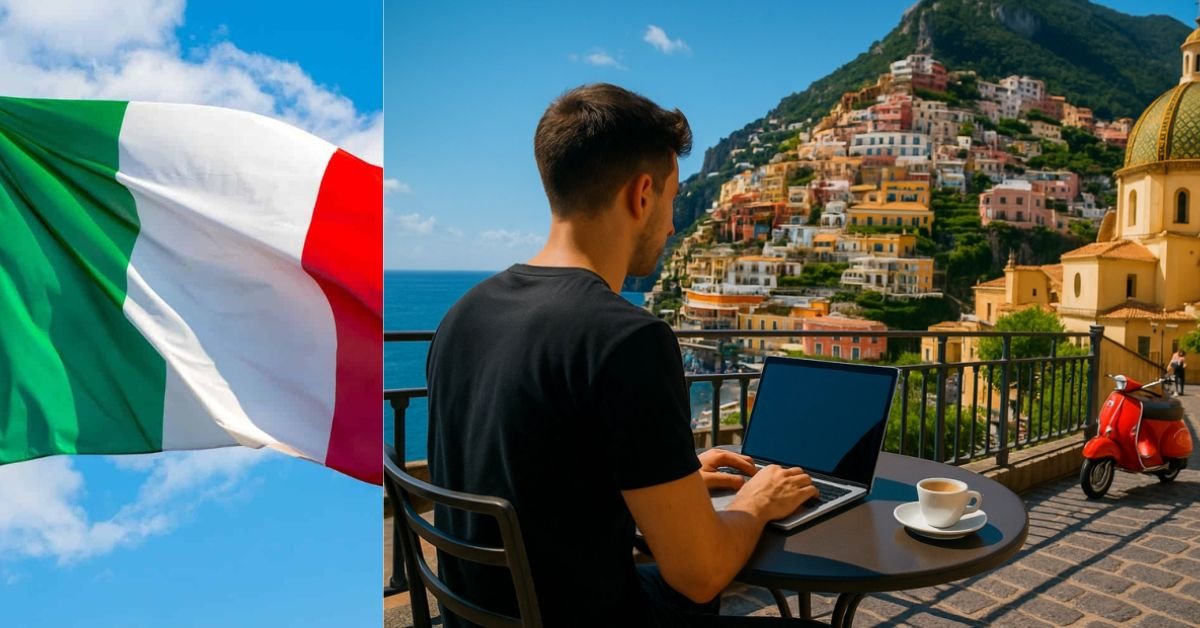
Italy’s Digital Nomad Visa vs. Self-Employed Visa: 2026 Comparison
The relocation landscape in Italy is changed drastically and towards 2026. Since the Digital Nomad Visa (DNV) is now fully developed and the Self-Employed Visa explained in the recent three-year Decreto Flussi, the decision between them is a stakes game.
The two visas provide an entry point to the Italian lifestyle, though they offer absolutely different career frameworks. In the case when you want to work in a villa in Tuscany at a Silicon Valley technology company, the DNV is your probable victor. But, in case you intend to start a local start-up or become an advisor to the SMEs in Italy, the Self-Employed route will be the obligatory, though more complicated, one.
Digital Nomad Visa (DNV) of Italy in 2026
The DNV was released with world recognition and is targeted at the professionals of the highest level. In the case of 2026, the Italian government has perfected the verification of applications so that they are not doing the disguised local employment.
- The “Highly Skilled” Rule: The applicants should have a degree in the university (Bachelors or above) or have at least 5 years of professional experience (3 years in certain IT positions).
- Income Threshold: You are to demonstrate a consistent income of not less than 28 thousand euro annually. This is approximately three times the minimum required to be exempted of healthcare in Italy.
- Remote Work Proof: You have to submit a remote work agreement or business arrangements which will show that you can work using the tools of an Italian telecommunication with clients who are out of Italy.
- The 2026 Tax Bonus: It is being discussed by the legislature in the 2026 Budget Law as a Digital Nomad Tax Bonus, which would be a major income tax exemption of two years or more.

Self-Employed Visa (Lavoro Autonomo)
This is the conventional path of freelancers and entrepreneurs. But it is controlled by the Decreto Flussi 2026 2028 and it is a competition race to have a place.
- The Quota Challenge: 2026 has only 650 slots in the world of self-employed professionals. These are normally claimed within minutes of “Click Day.”
- 2026 Click Day Schedule: The non-seasonal self-employed entry Click Day is to start February 16, 2026. Applications are normally opened several months before.
- The Nulla Osta Requirement: You must also have a security clearance (Nulla Osta) at the Italian Immigration office prior to your visa being applied at a consulate, unlike the DNV.
- Economic Impact: First-time founders of startups or those intending to invest at least 500,000 were usually given the first priority, as well as those who intend to create three or more employment opportunities locally.
Tax Implications and incentives in 2026
The most pronounced point of divergence is taxation. The considerations are mainly the Regime Forfettario and the Impatriati Regime in 2026.
- Regime Forfettario: The majority of self-employed citizens choose the so-called flat tax (5%), paying this sum the first five years on the income less than 85000.
- Impatriati Regime (2025/2026 Reform): This incentive is prompting a 50 percent tax reduction but based on a three-year stay on the Italian soil and generally high qualification.
- Social Security (INPS): Under whatever visa you have you are obliged to pay the Italian social security system which is usually between 24 and 26% of what you earn to the system, though not all the time.
FAQs
-
Replacement of a Digital Nomad Visa with a Self-Employed Visa?
Yes. When you are interested in acquiring Italian clients, you can request to change your residency permit (Permesso di Soggiorno). This is however subject to availability of conversion quotas in the Decreto Flussi.
-
Does Digital Nomad Visa result in the Permanent Residency?
Yes. Upon 5 years of legal and permanent residence, you may apply to a long-term EU residence permit and then, after 10 years, you may obtain citizenship in Italy.
-
What is Click Day–2026 Self-Employed Visa?
The exact date of the opening of the online application portal is the so-called Click Day. Quotas are kept to a minimum and this means that applications are done in first come first served. For 2026, the key date is February
-
Are both required to have health insurance?
Yes. In both visas, you are required to submit evidence of having your personal health insurance worth not less than 30, 000 per annum. On becoming a resident, you have the option of paying a fee to become a member of the Italian National Health Service (SSN).
-
What is the processing time?
The DNV is far more expedited, and the time is usually 30 to 90 days. The Self-Employed Visa may require 4 to 8 months because the Nulla Osta process is a complicated one.
Final Thought
In case you have a high-paying job in a foreign country and appreciate speed, the Digital Nomad Visa will be your least resistance way. It also circumvents the hectic quota system and enables an instant relocation. But should your ambitions be to fit in to the local economy, or practice a regulated profession (such as Law or Medicine) in Italy, then the Self-Employed Visa is your only option, in spite of its red tape.
Disclaimer
This article is informative and educational. The readers are recommended to confirm the information provided by the official authorities, i.e. the Italian Ministry of Foreign Affairs, or a licensed immigration attorney, prior to committing themselves to travel or financial decisions.